Free Construction Estimate Template: How to Price a Job Line by Line
Updated November 7, 2026
A good estimate is a list of quantities multiplied by unit costs, with your overhead and profit added on top in a consistent way. The free calculator below does the maths; this guide explains what to put into it.
Try it free: Construction Estimate Calculator
Build a quick line-item construction estimate with material and labour unit costs, sales tax on materials, overhead, contingency and profit.
Open the calculator1. Break the job into line items
Work through the job in the order it will be built — site work, foundations, framing, roofing, openings, finishes. Each line needs a quantity, a unit (sq ft, lin ft, each) and two rates: material cost per unit and labour hours per unit.
- Measure from drawings or a site visit and note the source of each quantity.
- Use your own supplier prices, not national averages.
- Track real production rates on a few jobs — they're the most valuable number in your estimate.
2. Add tax, overhead and contingency
Sales tax usually applies to materials, not labour (check your jurisdiction). Overhead covers costs that aren't tied to one job: insurance, vehicles, office, software. Contingency covers the unknowns — older homes and renovations deserve more.
3. Apply profit — and check your margin
A 12% markup is not a 12% margin. If you add 12% profit to cost, your margin on the final price is about 10.7%. The calculator shows both so you can see what you're really earning.
4. When to move beyond a free template
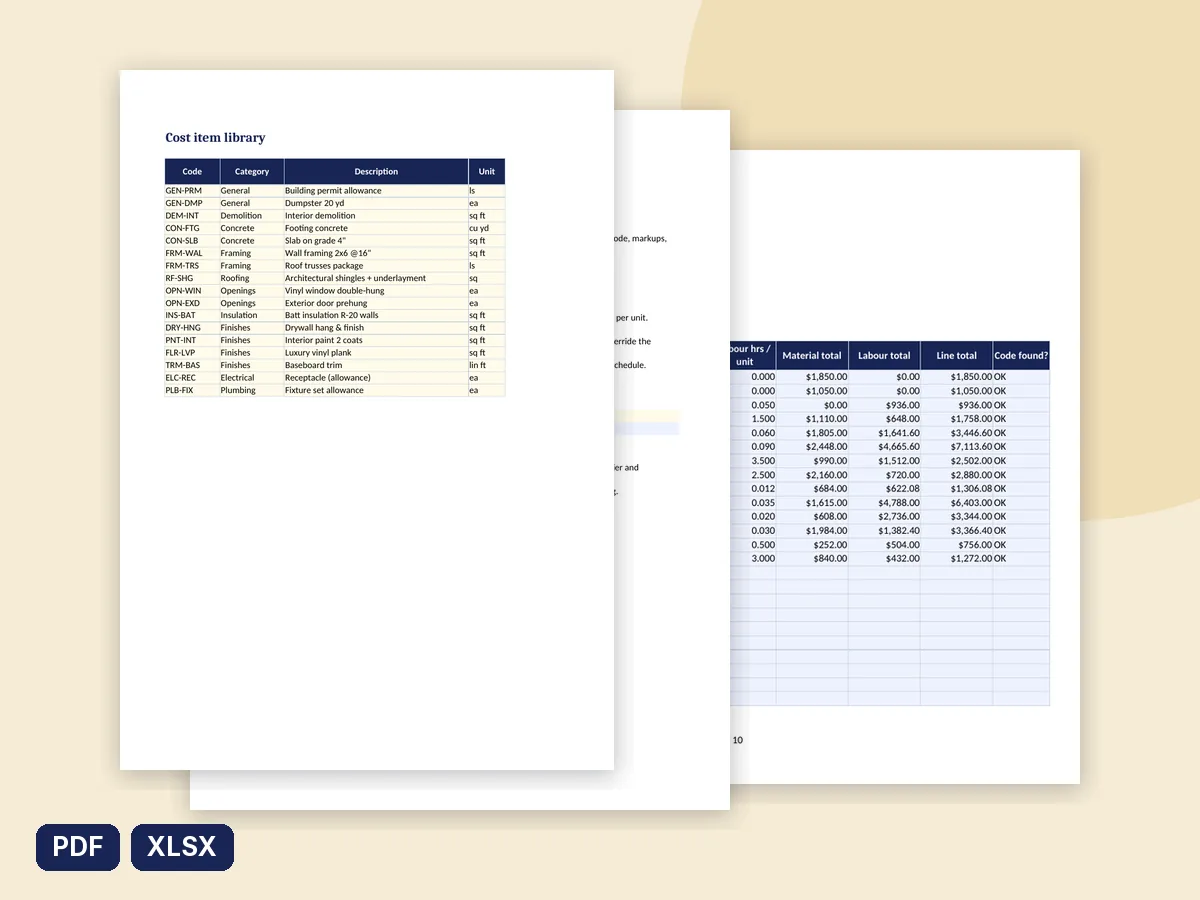
If you estimate every week, a reusable item library saves hours: type a code and quantity and the description, unit and prices fill in. That's what the Contractor Professional Estimating System is built around.
Questions
Is the online calculator really free?
Yes. It runs in your browser, needs no account and doesn't store your numbers.
Does it include local prices?
No. Prices vary too much by region and supplier — you enter your own.