Home and family organizing: inventory, emergency information, chores and budget
By the Brainfy Studio editorial team · Updated
Organizing a household is mostly a few records kept up to date: what you own, who to call in an emergency, who does which job, and where the money goes. This page sets out a routine for each, with an example, and links to the free tool, guide, sample page or file that fits.
It is written for the person who keeps the household running — and for anyone helping a family set these records up. The example family and figures are invented.
1. Make a home inventory you can find later
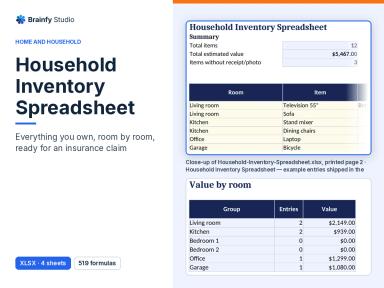
Go room by room and record each item worth listing, with where you bought it, when, and what it would cost to replace. A photo or receipt reference for each line makes the record far more useful. Totals by room show where most of the value sits.
- Start with the rooms that hold the most value, not the whole house at once.
- Estimate what each item would cost to replace today, not what you paid years ago.
- Keep a copy away from home (cloud storage or with a relative) and review it once a year.
An example after the first weekend:
| Room | Items recorded | Estimated value |
|---|---|---|
| Living room | 9 | $6,420.00 |
| Kitchen | 14 | $5,180.00 |
| Main bedroom | 7 | $3,350.00 |
| Garage | 11 | $4,275.00 |
| Total | 41 | $19,225.00 |
Files
- Household Inventory Spreadsheet (Paid — $14.00)
See inside: Household Inventory Spreadsheet v1.0.4
Renders of pages from the current files (XLSX). Select a thumbnail to enlarge it.
Use the left and right arrow keys to move between preview images.
2. Put emergency information in one binder
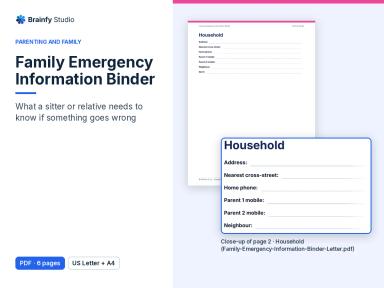
A babysitter, grandparent or neighbour should be able to open one binder and find the address, phone numbers, allergies, the family meeting places and where the water shut-off is. Fill it in together once, then check it when something changes.
- Write the household details and contacts.
- Agree two meeting places: one near home, one away from home.
- Mark the shut-offs, first-aid kit and fire extinguisher, and keep the binder where a visitor can find it.
Files
- Family Emergency Information Binder (Paid — $19.00)
- Emergency Information Kit (Paid — $14.00)
Free sample: Family Emergency Information Binder v1.0.3, page 5 of 6
Shows: The emergency plan page: meeting places near and away from home, out-of-area contact, emergency kit location and pet plan.
Not in the sample: Household information, family members and medical contacts, babysitter instructions and the utilities page.
No account needed. The page is copied unchanged from the current file, with a “Sample” label and a faint watermark added. Free sample: print and use it for yourself, your household or your own business. Don't resell or redistribute the file; share the link instead. The full product is sold under the Standard Licence. See the full product.
3. Share household jobs fairly
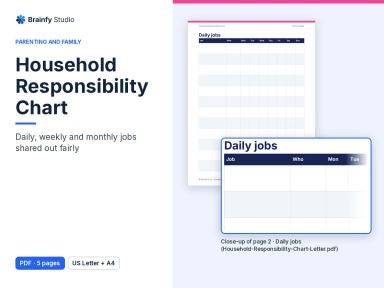
Write every recurring job down, decide who owns it and how often it happens, and review it at a short family meeting. Splitting daily, weekly and monthly jobs onto separate charts stops the big monthly jobs being forgotten.
- List daily, weekly and monthly jobs separately.
- Give each job one named owner.
- Swap jobs at the family meeting rather than mid-week.
Files
- Household Responsibility Chart (Paid — $7.00)
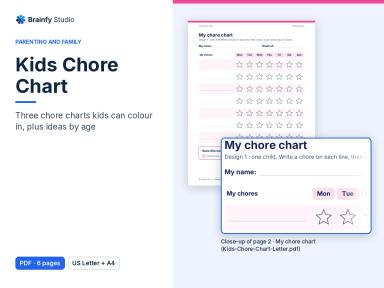
- Kids Chore Chart (Paid — $7.00)
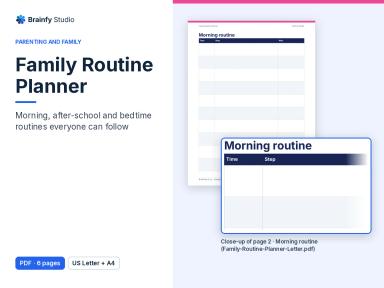
- Family Routine Planner (Paid — $12.00)
Free sample: Household Responsibility Chart v1.0.4, page 2 of 5
Shows: The daily jobs chart: job, who, and a box for each day of the week.
Not in the sample: The weekly and monthly job charts and the family meeting page.
No account needed. The page is copied unchanged from the current file, with a “Sample” label and a faint watermark added. Free sample: print and use it for yourself, your household or your own business. Don't resell or redistribute the file; share the link instead. The full product is sold under the Standard Licence. See the full product.
4. Check the monthly budget in ten minutes
Once a month, put take-home income against the main spending categories and look at what is left. In the example a household with $6,000.00 of take-home income and $5,500.00 of spending has $500.00 left, a savings rate of 8.33%.
Two incomes and six spending categories:
| Line | Amount |
|---|---|
| Income (take-home: $4,200.00 + $1,800.00) | $6,000.00 |
| Housing | $2,150.00 |
| Food | $980.00 |
| Transport | $520.00 |
| Utilities | $310.00 |
| Childcare | $900.00 |
| Other | $640.00 |
| Total spending | $5,500.00 |
| Left over | $500.00 |
| Savings rate | 8.33% |
Free online tool
Files
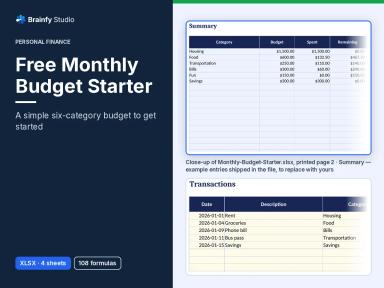
- Free Monthly Budget Starter (Free — sign in to download)
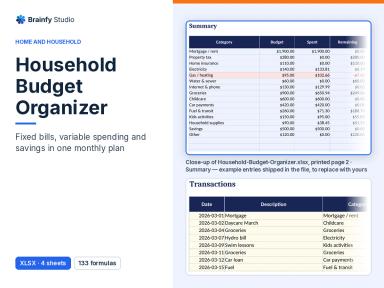
- Household Budget Organizer (Paid — $19.00)
See inside: Household Budget Organizer v1.0.4
Renders of pages from the current files (XLSX). Select a thumbnail to enlarge it.
Use the left and right arrow keys to move between preview images.
5. Check the pantry before you shop
A short pantry list with a minimum quantity for the things you always use turns the shopping list into a two-minute job: anything below its minimum goes on the list.
Files
- Pantry Inventory Tracker (Paid — $9.00)
Files mentioned on this page
Facts below are checked against the files customers download. Prices are current catalogue prices in USD.
Household Inventory Spreadsheet (Paid — $14.00)
XLSX · 1 file · sheets: Start Here, Inventory, Lists, By Room
Room, item, model, serial number, purchase date, quantity and your own estimated value; totals by room and a flag for items without a receipt or photo.
Family Emergency Information Binder (Paid — $19.00)
PDF · 2 files · US Letter and A4 · 6 pages per file
Household details, family members and medical contacts, babysitter instructions, emergency plan and utilities.
Emergency Information Kit (Paid — $14.00)
PDF · 2 files · US Letter and A4 · 8 pages per file
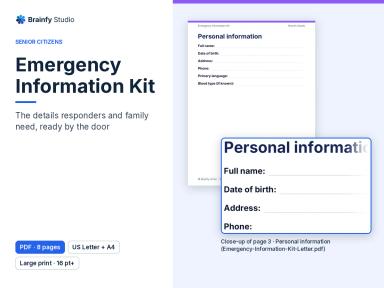
A longer emergency information set, including a wallet card.
Household Responsibility Chart (Paid — $7.00)
PDF · 2 files · US Letter and A4 · 5 pages per file
Daily, weekly and monthly job charts and a family meeting page.
Kids Chore Chart (Paid — $7.00)
PDF · 2 files · US Letter and A4 · 6 pages per file
Three weekly chore charts for children (one child, up to three children, whole family), chore ideas by age and a reward planner.
Family Routine Planner (Paid — $12.00)
PDF · 2 files · US Letter and A4 · 6 pages per file
Morning, after-school and bedtime routine charts, a weekly family planner and a routine reward tracker.
Free Monthly Budget Starter (Free — sign in to download)
XLSX · 1 file · sheets: Start Here, Summary, Setup, Transactions
Free with an account: a simple monthly budget to start with.
Household Budget Organizer (Paid — $19.00)
XLSX · 1 file · sheets: Start Here, Summary, Setup, Transactions
A fuller household budget with your own categories and a transaction log.
Pantry Inventory Tracker (Paid — $9.00)
XLSX · 1 file · sheets: Start Here, Pantry, Lists
Pantry, fridge and freezer items with quantity on hand, the minimum to keep and best-before date; anything below its minimum is flagged BUY.
Limits and honest notes
- These are organisational records. For insurance, legal or medical questions, ask your insurer, a lawyer or your doctor or pharmacist.
- Keep sensitive records (account numbers, ID documents) somewhere secure; the binder is for information a babysitter or relative needs in an emergency.
- PDFs are flat printable pages (no fillable fields). Spreadsheet formulas are checked in LibreOffice Calc only. See the compatibility page.
Read what we test for each file format and the licence. All free samples are on the samples page.