A regular, enjoyable routine of puzzles, games and conversation gives a week shape and gives visitors something to share. The aim is enjoyment and company, at a print size and pace that suit the person. This guide covers choosing activities, getting large print right, and planning a week for one person at home or a small group.
On this page
Start with what the person enjoys
Ask about the puzzles, games and pastimes they liked before, and which ones they would like to try. Someone who did the crossword every morning may enjoy that again at a larger size; someone who never liked word games may prefer colouring, cards or a conversation about places they have lived.
Mix activities that are done alone with ones that are shared. Solo puzzles fill quiet mornings; bingo, trivia and conversation cards work best with family, visitors or a group.
Get the print size right
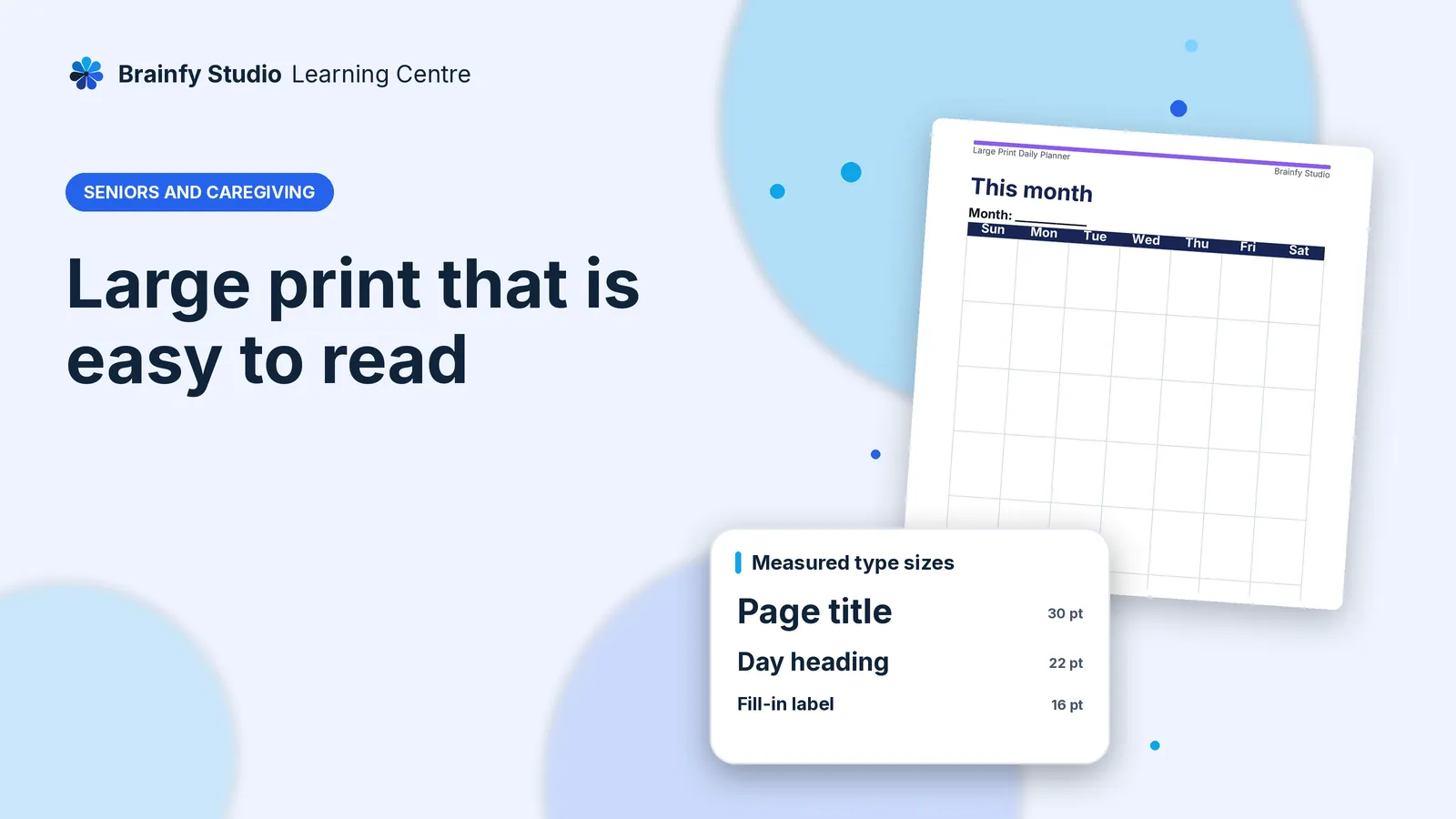
Large print only helps if it is printed at full size. Print at 100% or "Actual size" rather than "Fit to page", single-sided, on plain white paper with dark ink, and check the first page before printing a whole book. Good, even lighting and a firm surface or clipboard make as much difference as the type size.
A free sampler is a practical way to test: print one page, ask the person if it is comfortable to read at a normal distance, and only then buy a full collection.
Choose a gentle level and build up
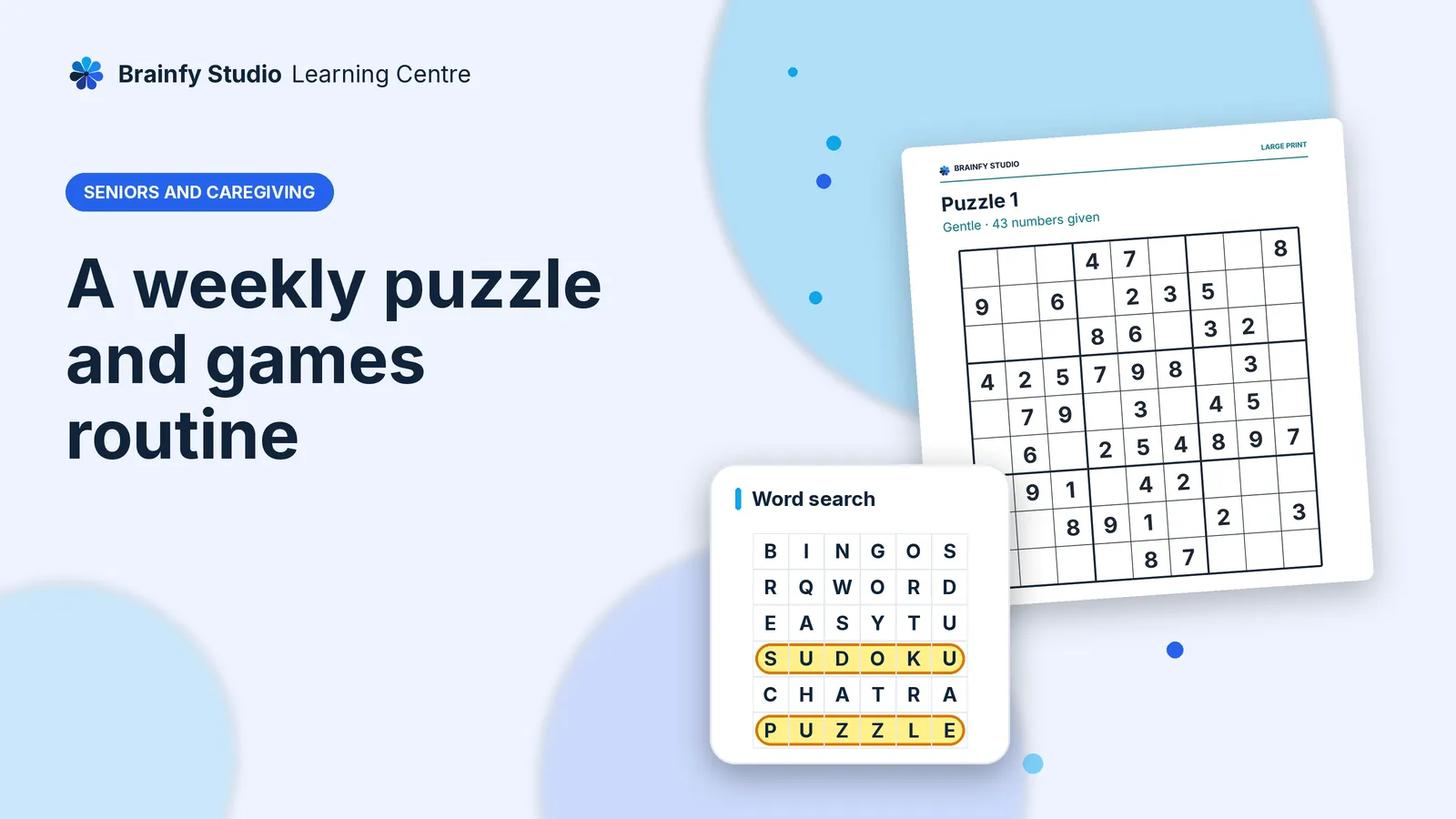
Start with puzzles a little easier than you think are needed. Finishing a puzzle is satisfying; getting stuck on the first one is not. Collections that are graded into levels let you move up when the easier pages feel quick.
Keep sessions short, about 20 to 30 minutes, and stop while the person is still enjoying it. Answers at the back are there to help, not to mark mistakes.
Plan the week around fixed points
Put activities next to things that already happen every week: after breakfast, before a regular phone call, on the day a family member visits. A routine that fits around appointments and rest is more likely to last than an ambitious timetable.
For a group, an activity calendar shows everyone what is on each day, and a session plan covers who is helping, what to print and what to set out. Asking the group what they enjoy, and changing the plan when interest fades, keeps attendance up.
- One solo puzzle on most days, at a regular time.
- One shared game or conversation session when someone visits.
- A rest day with nothing planned.
- A note of what was enjoyed and what to try next week.
Adapt for comfort and ability
Some people need bolder lines, fewer items per page or more space to write; others find a pen easier to hold with a foam grip. Colouring with thick lines and conversation cards need no right answers at all. If vision, hearing, hand or memory changes are making activities harder, an optometrist, audiologist, doctor or occupational therapist can suggest practical adjustments.
Large-print collections for each kind of activity
Brainfy Studio's Large Print Activity Collection combines five collections in one download: 100 sudoku, 60 crosswords, 50 colouring pages, 100 conversation cards and 40 bingo cards with 5 group games. Large Print Easy Sudoku has 100 puzzles in three gentle levels with one big grid per page; Large Print Bingo and Social Games has 40 unique bingo cards, a caller board and 75 calling slips plus 5 social games; Conversation and Reminiscence Cards are 100 cards in 10 themes with no right or wrong answers.
For organisers, the 2027 Activity Calendar and Session Planner has 12 large-print month calendars and 20 planning sheets. The free Large Print Activity Sampler includes two sudoku puzzles, a crossword, two colouring pages, a bingo card and a conversation game, so you can check the print size first. Each comes in US Letter and A4.
Worked example: a week for one person at home
A fictional 82-year-old enjoys sudoku and talking about travel, and has a daughter who visits on Wednesdays and Saturdays. The plan uses short sessions at times that already exist in the week.
| Day | Activity | With | Minutes |
|---|---|---|---|
| Monday | Two gentle sudoku after breakfast | Alone | 20 |
| Tuesday | Word search, then a phone call about it | Alone, then a friend | 25 |
| Wednesday | Conversation cards: travel theme | Daughter | 30 |
| Thursday | Bold-line colouring page | Alone | 20 |
| Friday | Easy crossword | Alone | 25 |
| Saturday | Bingo with the grandchildren | Family | 30 |
| Sunday | Rest day | 0 | |
| Total | 150 |
That is 150 minutes across the week, two and a half hours, with two shared sessions and one rest day. If Tuesday's word search is always left unfinished, swap it for something else next week.
Before you print
- The printer is set to 100% or Actual size, not Fit to page.
- A test page has been read comfortably at a normal distance.
- The first puzzles are at a gentle level.
- Pens or pencils are easy to hold, and the lighting is good.
- Shared sessions are planned on days when someone visits.
- There is at least one rest day in the week.
Questions
Do puzzles prevent memory loss?
We don't make health claims about puzzles or games. Enjoy them for the fun and company they bring; ask a doctor about memory or health concerns.
What print size should I look for?
Check by printing a sample page at 100% and asking the person to read it at a normal distance. Comfort varies from person to person.
Can I print the pages for a group?
Read the licence on each product page. The Standard licence covers use by you, your household or your own business. If you run activities for an organisation such as a care home or community centre, email support before printing for it.
Is there a free version?
Yes. The Large Print Activity Sampler is free with an account and includes puzzles, colouring, bingo and a conversation game.
Sources and method
Product facts were read from each product's live page on 16 November 2026. The weekly minutes in the example are added up by an automated test.